Al Jazeera acquires Al Gore's Current TV

LOS ANGELES Al-Jazeera, the Pan-Arab news channel that struggled to win space on American cable television, has acquired Current TV, boosting its reach nearly ninefold to about 40 million homes. With a focus on U.S. news, it plans to rebrand the left-leaning news network that cofounder Al Gore couldn't make relevant.

The former vice president confirmed the sale Wednesday, saying in a statement that Al-Jazeera shares Current TV's mission "to give voice to those who are not typically heard; to speak truth to power; to provide independent and diverse points of view; and to tell the stories that no one else is telling."

The acquisition lifts Al-Jazeera's reach beyond a few large U.S. metropolitan areas including New York and Washington, where about 4.7 million homes can now watch Al-Jazeera English.

Al-Jazeera, owned by the government of Qatar, plans to gradually transform Current into a new channel called Al-Jazeera America by adding five to 10 new U.S. bureaus beyond the five it has now and hiring more journalists.

Al-Jazeera spokesman Stan Collender said there are no rules against foreign ownership of a cable channel — unlike the strict rules limiting foreign ownership of free-to-air TV stations. He said the move is based on demand, adding that 40 percent of viewing traffic on Al-Jazeera English's website is from the U.S.

"This is a pure business decision based on recognized demand," Collender said. "When people watch Al-Jazeera, they tend to like it a great deal."

Al-Jazeera has long struggled to get carriage in the U.S., and the deal suffered an immediate casualty as Time Warner Cable Inc., the nation's second-largest cable TV operator, announced it is dropping Current TV due to the deal.

"Our agreement with Current has been terminated and we will no longer be carrying the service. We are removing the service as quickly as possible," the company said in a statement.

Previous to Al-Jazeera's purchase, Current TV was in 60 million homes.

In 2010, the network's managing director, Tony Burman, blamed a "very aggressive hostility" from the Bush administration for reluctance among cable and satellite companies to show the network.

Even so, Al-Jazeera has garnered respect for its ability to build a serious news product in a short time. But there may be a culture clash at the network. Dave Marash, a former "Nightline" reporter who worked for Al-Jazeera in Washington, said he left the network in 2008 in part because he sensed an anti-American bias there.

Current, meanwhile, began as a groundbreaking effort to promote user-generated content. But it has settled into a more conventional format of political talk television with a liberal bent. Gore worked on-air as an analyst during its recent election night coverage.

Former New York Gov. Elliot Spitzer, former Michigan Gov. Jennifer Granholm and Cenk Uygur are currently its lead personalities. Current signed Keith Olbermann to be its top host in 2011 but his tenure lasted less than a year before it ended in bad blood on both sides.

Current has largely been outflanked by MSNBC in its effort be a liberal alternative to the leading cable news network, Fox News Channel.

Current hired former CNN Washington bureau chief David Bohrman in 2011 to be its president. Bohrman has pushed the network to innovate technologically, with an election night coverage that emphasized social media conversation.

Current TV, founded in 2005 by former vice president Gore and Joel Hyatt, is expected to post $114 million in revenue in 2013, according to research firm SNL Kagan. The firm pegged the network's cash flow at nearly $24 million a year.

Read More..

Tax Deal Done - but How Can Obama Sign It?


Jan 2, 2013 6:29pm


ap obama ac 130102 wblog Vacationing Obamas Options to Sign Fiscal Cliff Deal Include Air Force Jet, Autopen

AP Photo/Charles Dharapak


Congress officially delivered the bill to avert the fiscal cliff to the White House this afternoon, House Speaker John Boehner’s office told ABC News.


Now the question is when will the President sign it?


The bill, passed late on New Year’s Day, expires tomorrow at 11:59 a.m. when the current session of Congress concludes. If President Obama doesn’t sign it by then, constitutionally the bill is dead.


But this evening, eighteen hours before the deadline, the President is on a golf course in Hawaii.  And the bill is in Washington at the White House.


Administration officials won’t say what they will do despite repeated inquiries from ABC News.


There seem to be two options:  1) An Air Force jet can deliver the bill to Hawaii (better leave quickly!) in time for the President to sign it before 11:59 Eastern Standard Time; or, 2) The White House can use a presidential “auto-pen.”


The simple mechanical device uses a template of the presidential signature to scrawl it on paper if activated by the White House at Obama’s direction.


But would an auto-pen – usually used to sign insignificant correspondence and photographs – pass constitutional muster?  We don’t know.  The question has never been tested by the courts.


A 2005 legal study commissioned by former President George W. Bush determined that use of the autopen is constitutional but acknowledged the possibility that its use could be challenged.  Bush never used the autopen, officials from his administration told ABC.


President Obama is only believed to have used the autopen once to sign a piece of major legislation — the 2011 extension of the Patriot Act — which reached his desk while he was on a diplomatic trip to Europe. Officials invoked national security concerns to justify the move.


Use of the autopen has been controversial.  Conservative groups alleged last summer that Obama used an autopen to sign condolence letters to the families of Navy SEALs killed in a Chinook crash in Afghanistan — a charge the White House disputed flatly as false.


In 2004, then-Secretary of Defense Donald Rumsfeld was criticized for using an autopen to sign condolence letters to the families of fallen troops.


And in 1992 then-Vice President Dan Quayle even got into some hot water over his use of the autopen on official correspondence during an appearance on “This Week with David Brinkley.” More HERE.


ABC News’ Ann Compton and Devin Dwyer contributed reporting.


SHOWS: World News


Read More..

In-depth 2012: The best long reads of the year


Read more: "2013 Smart Guide: 10 ideas that will shape the year"


Dig deeper, look closer and think harder – these are the goals of New Scientist's in-depth articles. Each one is perfect for saving in your favourite read-it-later app and curling up in front of a glowing tablet for a good long read.


These are our editors' picks of our best features of the year, and all are prime examples of the amazing breadth of big ideas that were ripe for the tackling in 2012. When you have finished digesting these readable meals, visit our in-depth articles archive if you're hungry for more.


Richard Webb: "You might not have heard of the algorithm that runs the world." I certainly hadn't, or that its mathematical foundations are starting to look a little wobbly. An eye-opening examination of how seemingly abstruse mathematics is in fact deeply embedded in modern life: "The algorithm that runs the world"


Sally Adee: Gastric bypass surgery is the best surgery you're not getting, said Dr Oz on his popular medical advice show in the US. Because of enthusiasm from people like him, this operation has become massively popular – but by whimsically hacking at our stomach, might we might be messing with a system far more complicated than anyone really understands? Samantha Murphy had the surgery and began to realise that losing 45 kilograms could come with some profound neurological trade-offs: "Change your stomach, change your brain"


Michael Le Page: Nowadays most people either haven't heard of the 1970 book The Limits to Growth, or believe – wrongly – that the research it was based on has been discredited. But the main message of Limits is perhaps more relevant than ever – that a delayed response to mounting environmental problems leads to catastrophe further down the line: "Boom and doom: Revisiting prophecies of collapse"


Richard Fisher: This is a simple story about a scientific mystery. Strange rumbles, whistles and blasts have been reported all over the world for centuries. In New York state, they are called "Seneca guns"; in the Italian Apennines they are described as brontidi, which means thunder-like; in Japan they are yan; and along the coast of Belgium they are called mistpouffers – or fog belches. Yet the cause is often unexplained – what on Earth could be behind them? "Mystery booms: The source of a worldwide sonic enigmaSpeaker"


Valerie Jamieson: It's been a sensational year for particle physics, but the Higgs boson isn't the only fascinating particle in town. Meet 11 more particles that change our understanding of the subatomic world: "11 particles for 11 physics puzzlesMovie Camera"


David Robson: What is the secret of the legendary "flow state" that seems to mark out genius in everyone from piano virtuosos to tennis champions? With the latest brain stimulation techniques, it may soon be within everyone's reach, and Sally Adee writes with panache as she describes her own use of the technology during a terrifying marksmanship training session. This has everything I want to read in a story – drama, a revolutionary idea and some practical advice for anyone to try at home: "Zap your brain into the zone: Fast track to pure focus"


Graham Lawton: The writer of this article, Christopher Kemp, is a self-confessed lover of marginalia – nooks and crannies of science that are often overlooked. But as this beautifully written story reveals, those nooks and crannies often contain rich and fascinating material. Material, in fact, like ambergris: "Heaven scent: The grey gold from a sperm whale's gut"


Ben Crystall: Many people may remember the wonder material Starlite from an episode of BBC TV's Tomorrow's World – it seemed to have a miraculous ability to withstand fire and heat. So what happened to it? In this feature Richard Fisher uncovers the strange tale of Starlite and its eccentric inventor Maurice Ward, and on the way reveals fascinating details about Ward and his creation. And though Ward is dead, the story may not be over – it now looks like Starlite could get a second chance… "The power of cool: Whatever became of Starlite?"


Clare Wilson: I enjoyed working on this feature the most this year because to me it truly represents the future of medicine. New Scientist often predicts that some new medicine or technology will be available in five years' time. When it comes to using gene therapies or stem cell therapies on babies in the womb – the subject of this feature – the timeline is probably more uncertain, yet I don't see how anyone can doubt that some day it will happen: "Fetal healing: Curing congenital diseases in the womb"


If you would like to reuse any content from New Scientist, either in print or online, please contact the syndication department first for permission. New Scientist does not own rights to photos, but there are a variety of licensing options available for use of articles and graphics we own the copyright to.


All comments should respect the New Scientist House Rules. If you think a particular comment breaks these rules then please use the "Report" link in that comment to report it to us.


If you are having a technical problem posting a comment, please contact technical support.


Read More..

Colorado town in the thick of fracking dispute


Longmont, COLORADO: The US oil and gas industry is condemning a move by one Colorado town to impose its own ban on the practice of hydraulic fracturing.

Voters in Longmont have chosen to outlaw the controversial practice within city limits, but drillers and the state government said the city has overstepped its bounds.

Space for large houses with mountain views -- one of the reasons the population of the Colorado city of Longmont has grown steadily over the past twenty years. But some residents are not happy with a new neighbour that has moved in recent years.

Natural gas wells and pipelines have sprung up around Longmont - often very close to subdivisions.

Michael Bellmont, one of the activists involved in a recent campaign to ban hydraulic fracturing in Longmont, said modern fracking practices use chemicals that can contaminate surrounding air and water, and is dangerous to health.

He said: "if you live within half a mile of these wells, one is 250 per cent more likely to have negative and chronic health impacts, and 60 per cent more likely to get cancer."

The majority of Longmont voters agree with Bellmont -- in November, they approved the ban on hydraulic fracturing in the city by a 60 to 40 per cent margin.

That ban has triggered a row with the oil and gas industry, which already leases land and drills in Longmont, and maintains fracking is safe.

Colorado governor John Hickenlooper -- a supporter of the oil and gas industry -- expects drilling companies to sue to overturn the ban.

Tisha Conoly Schuller, president and CEO of the Colorado Oil & Gas Association, said: "The oil and gas industry -- we're evaluating our options, and then the state government has also been looking at their options. So I imagine we will see a lawsuit in Longmont, and there's lots of different ways it could come about."

Environmentalists are locked in a heated debate with county and state regulators over the issue -- including proposed rules on how far wells should be from people's homes.

Dr William Fleckenstein of the Colorado School of Mines said: "It adds a lot of jobs, there's a lot of rigs that are there. But at the same time, the rigs that are drilling -- the pipelines are going to impact people's lives and the industry has to take into account those impacts."

In Longmont, the city is gearing up for a protracted and expensive legal battle -- one which could set a precedent for other towns and cities that want to take matters regarding fracking into their own hands.

-CNA/ac


Read More..

What GOP hates in fiscal deal


on your computer or on the CNN Apps for iPhone® and iPad®.


iPhone, iPad and Mac are trademarks of Apple Inc., registered in the U.S. and other countries. App Store is a service mark of Apple Inc.


If you get CNN and HLN at home, you can watch them online and on the go for no additional chargeStart watching


Read More..

Pa. gov. to sue NCAA over Penn State sanctions

HARRISBURG, Pa. Gov. Tom Corbett said Tuesday he plans to sue the NCAA in federal court over stiff sanctions imposed against Penn State University in the wake of the Jerry Sandusky child sexual abuse scandal.

The Republican governor scheduled a Wednesday news conference on the Penn State campus in State College to announce the filing in U.S. District Court in Harrisburg.

The sanctions, which were agreed to by the university in July, included a $60 million fine that would be used nationally to finance child abuse prevention grants. The sanctions also included a four-year bowl game ban for the university's marquee football program, reduced football scholarships and the forfeiture of 112 wins.

The governor's office announced the news conference late Tuesday afternoon. His spokesman did not respond to repeated calls and emails seeking to confirm a Sports Illustrated story that cited anonymous sources saying a lawsuit was imminent.

Corbett's brief statement did not indicate whether his office coordinated its legal strategy with state Attorney General-elect Kathleen Kane, who is scheduled to be sworn in Jan. 15.

Kane, a Democrat, ran on a vow to investigate why it took state prosecutors nearly three years to charge Sandusky, an assistant under former football coach Joe Paterno. Corbett was the attorney general when that office took over the case in early 2009 and until he became governor in January 2011.


6 Photos


Who's who in the Penn State child sex abuse scandal


Play Video


Pa. Atty Gen: Penn State officials showed "callous lack of concern"


State and congressional lawmakers from Pennsylvania have objected to using the Penn State fine to finance activities in other states. Penn State has already made the first $12 million payment, and an NCAA task force is deciding how it should be spent.

The NCAA, which did not respond to calls seeking comment Tuesday, has said at least a quarter of the money would be spent in Pennsylvania.

Republican U.S. Rep. Charlie Dent called that an "unacceptable and unsatisfactory" response by the NCAA to a request from the state's U.S. House delegation that the whole $60 million be distributed to causes within the state.

Last week, state Sen. Jake Corman, a Republican whose district includes Penn State's main campus, said he plans to seek court action barring any of the first $12 million from being released to groups outside the state.

The fine was just part of college sports' governing body's sanctions on Penn State for its handling of the abuse scandal involving Sandusky, who was convicted in June on charges he sexually abused 10 boys, some on campus. The landmark sanctions, though, didn't include a suspension of the university's football program, the so-called death penalty.

Sandusky, 68, was convicted on 45 counts. He's serving a 30- to 60-year state prison term.

Eight young men testified against him, describing a range of abuse they said went from grooming and manipulation to fondling, oral sex and anal rape when they were boys.

Sandusky did not testify at his trial but has maintained his innocence, acknowledging he showered with boys but insisting he never molested them.

Read More..

House Plans Up-or-Down Vote on 'Cliff' Deal


House Republicans have agreed to have an up-or-down vote on the bipartisan Senate deal to avert the "fiscal cliff," rather than trying to amend the Senate bill with more spending cuts before voting, according to a senior GOP leadership aide.


The vote will likely come tonight despite top House Republicans' earlier opposition to the deal, which the Senate passed in the wee hours of New Year's Day, because of concerns about the cost of the deal's spending provisions.


If House Republicans had tweaked the legislation, there would have been no clear path for its return to the Senate before a new Congress is sworn in Thursday.


The Republican-controlled House was expected to launch into procedural steps leading up to a vote, which was possible late this evening.


Before deciding on the up-or-down vote, GOP leaders had emerged from a morning conference meeting disenchanted by the legislative package devised by Senate Minority Leader Mitch McConnell, R-Mo., and Vice President Biden early this morning, with several insisting they could not vote on it as it stood.


"I do not support the bill," House Majority Leader Eric Cantor, R-Va., said as he left the meeting. "We're looking for the best path forward. No decisions have been made yet."


Bill Clark/Roll Call/Getty Images


'Fiscal Cliff' Negotiations: Congress Reaches Agreement Watch Video


Fiscal Cliff Countdown: Missing the Deadline Watch Video


House Speaker John Boehner refused to comment on the meeting, but his spokesman said, "the lack of spending cuts in the Senate bill was a universal concern amongst members in today's meeting."


"Conversations with members will continue throughout the afternoon on the path forward," Brendan Buck said in a statement.


As lawmakers wrestled with the legislation, the non-partisan Congressional Budget Office estimated that the bill's added spending combined with the cost of extending tax cuts for those making under $400,000 would actually add $3.9 trillion to the deficit over the next 10 years. The Joint Committee on Taxation reached a similar conclusion.


The impasse once again raised the specter of sweeping tax hikes on all Americans and deep spending cuts' taking effect later this week.


"This is all about time, and it's about time that we brought this to the floor," House Minority Leader Nancy Pelosi said after emerging from a meeting with Democrats.


"It was a bill that was passed in the U.S. Senate 89-8. Tell me when you've had that on a measure as controversial as this?" she said of the overwhelming vote.


Pelosi could not say, however, whether the measure had the backing of most House Democrats.


"Our members are making their decisions now," she said.


Biden, who brokered the deal with McConnell, joined Democrats for a midday meeting on Capitol Hill seeking to shore up support for the plan.


While Congress technically missed the midnight Dec. 31 deadline to avert the so-called cliff, both sides have expressed eagerness to enact a post-facto fix before Americans go back to work and the stock market opens Wednesday.


"This may take a little while but, honestly, I would argue we should vote on it today," said Rep. Tom Cole, R-Okla., who sits on the Budget Committee. "We know the essential details and I think putting this thing to bed before the markets is important.


"We ought to take this deal right now and we'll live to fight another day, and it is coming very soon on the spending front."


Read More..

2012 review: The year in health science


Read more: "2013 Smart Guide: 10 ideas that will shape the year"


The first half of 2012 will be remembered for the saga over whether or not to publish controversial research involving versions of the H5N1 bird flu virus engineered to spread more easily in mammals. In the end openness won out, and both contentious studies did finally see the light of day.


This was also the year that saw the battle to eradicate polio reach its crucial endgame – just as another problem, in the form of totally drug resistant tuberculosis, reared its head.


Away from infectious disease, 2012 brought us a theory on the link between Tutankhamun, epilepsy and the first monotheistic religion, and an insight into the perils of premature ageing in Italy's ominously named Triangle of Death. Here are 10 more of the year's memorable stories.


Babies are born dirty, with a gutful of bacteria
Far from being sterile, babies come complete with an army of bacteria. The finding could have implications for gut disorders and our health in general


Forensic failure: 'Miscarriages of justice will occur'
Our survey of UK forensic scientists reveals that many are concerned that closure of the Forensic Science Service will lead to miscarriages of justice


Scandal of an underfunded and undertreated cancer
Lung cancer in those who have never smoked is on the rise – but they face the same stigma as their smoking counterparts


Ovarian stem cells discovered in humans
Stem cells capable of forming new eggs could promise limitless eggs for IVF treatments, and the rejuvenation of older eggs


Paralysis breakthrough: spinal cord damage repaired
An implant helping paralysed people stand unaided suggests the spinal cord is able to recover function years after severe damage


A real fMRI high: My ecstasy brain scan
Graham Lawton reports the highs, lows and psychedelic purple doors involved in taking MDMA while having his brain scanned


You may carry cells from siblings, aunts and uncles
Male cells found in the umbilical cord blood of baby girls with older brothers suggests fetal cells cross between mother and baby more than once thought


Can we deter athletes who self-harm to win?
The Paralympics may encourage a debate on a dangerous practice – and potential ways to prevent it


First non-hormonal male 'pill' prevents pregnancy
A non-hormonal drug that temporarily reverses male fertility appears to have few side effects in mice


Mining MRSA genetic code halts superbug outbreak
Whole genome sequencing of an MRSA outbreak has identified the person who unwittingly spread the bacteria around a hospital, stopping further infection


If you would like to reuse any content from New Scientist, either in print or online, please contact the syndication department first for permission. New Scientist does not own rights to photos, but there are a variety of licensing options available for use of articles and graphics we own the copyright to.


All comments should respect the New Scientist House Rules. If you think a particular comment breaks these rules then please use the "Report" link in that comment to report it to us.


If you are having a technical problem posting a comment, please contact technical support.


Read More..

White House, Republicans seal deal on fiscal cliff crisis


WASHINGTON: The White House and top Republicans struck a deal late Monday to avert huge New Year tax hikes and spending cuts known as the "fiscal cliff" that had threatened to send the US economy into recession.

The pact would raise taxes on the richest Americans -- those earning over $450,000 a year -- but exempt everyone else, and will put off $109 billion in budget cuts across the government for two months, top congressional aides said.

Vice President Joe Biden, who negotiated the deal with Republican Senate Majority leader Mitch McConnell, was on Capitol Hill to sell it to Democratic senators, a White House source added.

Tax hikes and spending cuts were due to come into force on January 1. But as global markets, sure to be rocked by a failure to head off the fiscal cliff, are closed for New Year's day, lawmakers have time to vote the deal into law.

A Senate vote was expected overnight on Monday while the House of Representatives was expected to follow suit on Tuesday after a display of dramatic New Year's Eve brinkmanship.

The deal would mean a return to Bill Clinton-era tax rates for top earners to 39.6 percent, starting at a threshold of annual household earnings of $450,000 and above.

Obama had originally campaigned for tax hikes to kick in for those making $250,000 and above and his acceptance of a higher threshold has already angered liberals, though still represents a political victory.

The president said it would extend tax credits for clean energy firms and also unemployment insurance for two million people due to expire later Monday.

It was also expected to include an end to a temporary two percent cut to payroll taxes for Social Security retirement savings and Medicare health care programs for seniors and changes to inheritance and investment taxes.

The president angered Republicans in remarks in which he warned -- in what is certain to be a bitter fight over cutting the deficit -- that he was not done with seeking higher taxes for the rich.

"Now, if Republicans think that I will finish the job of deficit reduction through spending cuts alone... then they've another thing coming," Obama said, and also poked fun at the glacial pace of Congressional deliberations.

Republicans immediately took to the floor of the Senate to complain.

Senator John McCain accused Obama of ridiculing Republicans and of needlessly antagonizing House of Representatives' members required to vote for the deal.

Republican Senator Bob Corker said his heart was pounding with disappointment at Obama's remarks.

"I know the president has fun heckling Congress. I think he lost probably numbers of votes with what he did," he said.

"It's unfortunate he doesn't spend as much time solving problems as he does with campaigns and pep rallies."

Signs that a deal could be close cheered investors Friday as US markets rose before closing for the year. The Dow Jones Industrial Average closed up 166.03 points (1.28 percent) at 13,104.14.

Both sides were Monday already gearing up for the next legislative showdown over the need to lift the government's statutory borrowing limit of $16.4 trillion, which was reached Monday.

The Treasury will now take extraordinary measures to keep the government afloat for an undisclosed period of time until the ceiling is raised. Republicans are already demanding spending cuts in return.

"I think there is going to be a pretty big showdown next time when we go to the debt limit," McCain told CNN.

-AFP/ac


Read More..

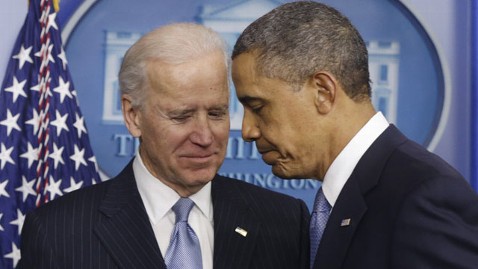
Biden pitches fiscal cliff deal to Democrats


STORY HIGHLIGHTS


  • NEW: Senate leaders cut a deal to avoid the fiscal cliff

  • NEW: Biden pitches the plan to Democrats late Monday

  • Obama says more work will be needed and chides Congress for dragging its feet

  • "Take the 84% of your winnings off the table," anti-tax crusader advises GOP


As the fiscal cliff looms, what's your New Year's message to Washington? Go to CNN iReport to share your video.


(CNN) -- Senate leaders and the White House struck a last-minute deal to avert the feared fiscal cliff Monday night, with Vice President Joe Biden headed to the Capitol Hill to pitch the plan to fellow Democrats.


"Happy New Year," Biden, who became the Democratic point man in the talks, told reporters. "Did you think we would be here New Year's Eve?"


But the House of Representatives went home long before midnight, meaning nothing will get through Congress before the combination of tax increases and spending cuts Congress has been scrambling to head off starts to kick in.


A source familiar with the deal told CNN that the Senate proposal would put off the cuts for two months and keep the expiring Bush-era tax cuts for individuals earning less than $400,000 or couples earning less than $450,000. Taxes on inherited estates over $5 million will go up, and that exemption will be indexed for inflation.


Biden had been in negotiations with Senate Minority Leader Mitch McConnell, R-Kentucky, since Sunday afternoon. Senate Majority Leader Harry Reid and House Minority Leader Nancy Pelosi, both Democrats, agreed to the plan in calls with President Barack Obama, a Democratic source said Monday night.


Economists warn the one-two punch of tax increases and spending cuts could push the U.S. economy back into recession and drive unemployment back over 9% by the end of 2013. Obama had chided lawmakers earlier Monday and warned that battles over spending still loomed, hitting a nerve among several Republicans in the Senate.


"They are close, but they're not there yet," Obama said. "And one thing we can count on with respect to this Congress is that if there is even one second left before you have to do what you're supposed to do, they will use that last second."


Obama said the plan on the table would prevent a tax increase for the overwhelming majority of Americans, extend the child tax and tuition credits for families, extend credits for clean-energy companies and extend unemployment benefits for 2 million people. But he said lawmakers still have to figure out how to mitigate the impact of the planned cuts.


And he warned that if Republicans think they can get future deficit reduction solely through spending cuts "that will hurt seniors, or hurt students, or hurt middle-class families without asking also equivalent sacrifice from millionaires or companies with a lot of lobbyists ... they've got another think coming."


Latest updates: Final fiscal cliff scramble


That irked Republican senators who have been grappling for a deal with the Democratic majority in that chamber. Sen. Bob Corker, R-Tennessee, called the president's comments "very unbecoming of where we are at this moment" and added, "My heart's still pounding."


"I know the president has fun heckling Congress," Corker said. "I think he lost probably numbers of votes with what he did."


And Sen. John McCain said Obama "sent a message of confrontation to Republicans" with his remarks.


"People have to wonder whether the president really wants issue resolved, or is it in his short-term political benefit for us to go over the cliff," said McCain, R-Arizona.


Read more: Why your paycheck is getting smaller, no matter what


A source familiar with the negotiations said the proposals under discussion would generate $600 billion by ending the Bush-era tax cuts on individuals with incomes above $400,000 and families over $450,000. The top tax rate would return to 39.6% from its current 35%.


The deal would also increase the estate tax to 40% from the current 35% level and cap itemized deductions for individuals with incomes above $250,000 and household income over $300,000, the source said.


In the House, GOP sources said there's little practical difference in settling the issue Monday night versus Tuesday. But if House Republicans approve the bill on Tuesday -- when taxes have technically gone up -- they can argue they've voted for a tax cut to bring rates back down, even after just a few hours, GOP sources said. That could bring some more Republicans on board, one source said.


Read more: What if there's no deal on fiscal cliff


Earlier, a GOP source told CNN that the sticking point in talks was $24 billion in spending cuts being sought by Republicans in place of the $110 billion in automatic spending now set to take effect.


As Monday's deadline drew nigh, federal agencies were preparing for the possibility of furloughing workers. At the Pentagon, a Defense Department official said as many as 800,000 civilian employees could be forced to take unpaid days off as the armed services face an expected $62 billion in cuts in 2013 -- about 12% of its budget.


Read more: Medicare patients may suffer if country goes over fiscal cliff


Those workers perform support tasks across the department, from maintaining aircraft and weapons systems to processing military payrolls and counseling families. The Pentagon believes it can operate for at least two months before any furloughs are necessary, but has to warn its civilian workforce that furloughs could be coming, the official said.


The White House budget office noted in September that sequestration was designed in 2011 as "a mechanism to force Congress to act on further deficit reduction" -- a kind of doomsday device that was never meant to be triggered. But Congress failed to substitute other cuts by the end of 2012, forcing the government to wield what the budget office called "a blunt and indiscriminate instrument."


Despite Obama's backing, one leading Senate Democrat warned a deal could run into trouble -- not only from House Republicans who have long opposed any tax increase, but also from liberals in the Senate who oppose allowing more high-income households to escape a tax increase.


"No deal is better than a bad deal, and this looks like a very bad deal the way this is shaping up," Sen. Tom Harkin, D-Iowa, said.


Conservative lobbyist Grover Norquist, whose Americans for Tax Reform pushes candidates to sign a pledge never to raise taxes, said the plan "right now, as explained" would preserve most of the Bush tax cuts and wouldn't violate his group's pledge.


"Take the 84% of your winnings off the table," Norquist told CNN. "We spent 12 years getting the Democrats to cede those tax cuts to the American people. Take them off the table. Then we go back and argue about making the tax cuts permanent for everyone."


But Robert Reich, who served as labor secretary in the Clinton administration, said the $450,000 threshold "means the lion's share of the burden of deficit reduction falls on the middle class, either in terms of higher taxes down the road or fewer government services." In addition, he said, the plan does nothing to raise the federal debt ceiling just as the federal government bumps up against its borrowing limit.


And that, McCain told CNN, is likely to be "a whole new field of battle."


"We just added 2.1 trillion in the last increase in the debt ceiling, and spending continues to go up," McCain said. "I think there's going to be a pretty big showdown the next time around when we go to the debt limit."


CNN's Mike Pearson, Jessica Yellin, Dana Bash, Deirdre Walsh, Lisa Desjardins, Ted Barrett and Ashley Killough contributed to this report.


Read More..